
Finland “an unseen brake on growth”
Business update and an honest rant on why Finland won't fix itself.

Why not write? Why not publish?
Reading the news today feels less like being informed… It just makes you stupid.
For years, Finnish economists have puzzled over an “unseen brake on growth,” as if the economy were being held back by some mysterious external force. One year, it’s weak purchasing power; the next, it’s misallocated subsidies; every two weeks, it's Russia's fault. The explanations change, but the conclusion stays the same: no one seems willing to call the problem what it is.
Finland’s stagnation isn’t cyclical. It’s structural. Every year, the Finance Ministry promises 1–2% growth. Every year, they quietly revise it down. Last November, the Ministry’s own chief economist admitted they’d have to lower their forecast again – growth might be just 1%, maybe less. “An unknown brake,” he called it. Unknown. As if twenty years of the same pattern isn’t data enough.
The suits always always forecast it wrong. Then they act surprised and start looking for the mystery brake. Every single time.
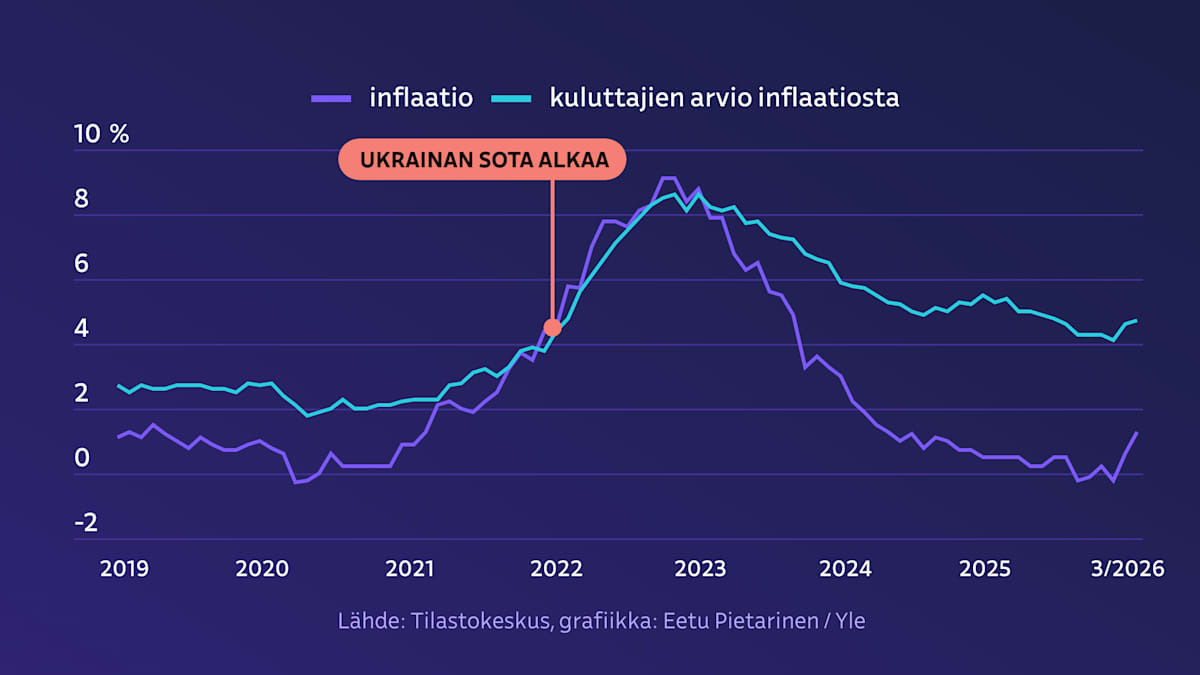
Now, the same confusion appears in how inflation is discussed. Falling inflation is presented as good news, as if prices themselves were coming down.
They aren’t.
If someone goes from 90 kilos to 120 over the summer and then says he’s only gaining two kilos a month now, nothing has been fixed. He’s still +30 kilos heavier and gaining more. The damage is already done.
Inflation works the same way. When it drops from 8% to 2%, prices don’t fall. They continue to rise, just more slowly. The higher price level is not reversed; it becomes permanent.
What is being presented as “relief” is simply a slowdown in the rate at which things are getting worse. “Inflation only 1.3%!”
And this morning: “Professor: We’re heading into recession – USA’s attack on Iran steamrolled the Finnish economy.”
Ah yes. The Finnish economy was doing great until USA ruined it. Just like it was doing great until Covid ruined it. And before that, until Russia ruined it. There’s always an external villain. Never ever look at a mirror.
The “unseen brake”
The “unseen brake.”
So what is this “unseen brake on growth”?
It isn’t unseen. It’s ignored.
Long-term growth is shaped by one thing: free people allocating capital where they see opportunity. When the state distorts incentives, punishes risk, and redirects capital politically, growth doesn't just slow temporarily → it stagnates.
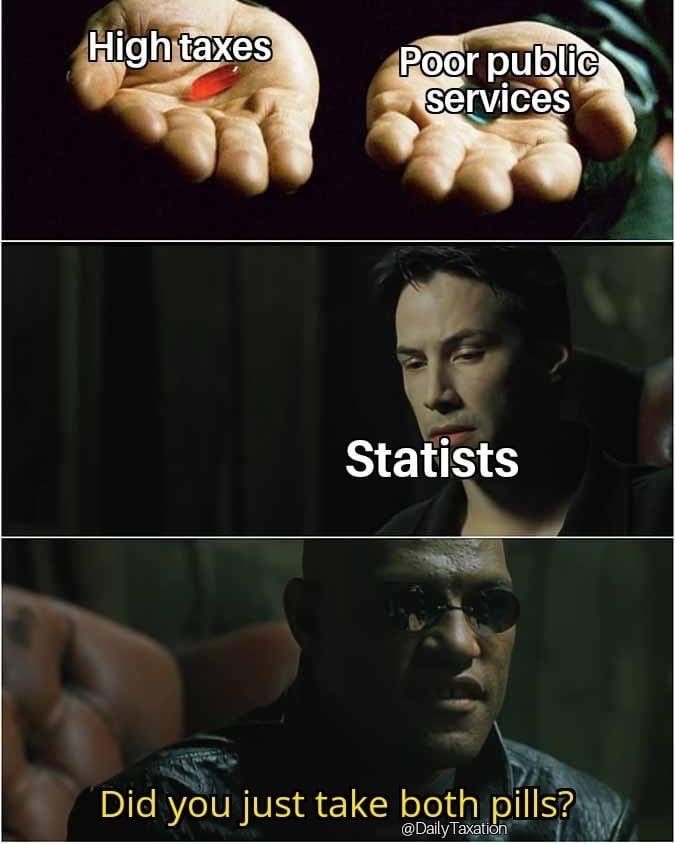
Calling it a mystery avoids accountability. Statists love mysteries.
Call it what it is. Then ask why there is no growth.
Increasing war mongering. The seen: defense budgets and NATO commitments. The unseen: every euro spent on military hardware is a euro not invested in productive enterprise, infrastructure, or returned to taxpayers.
The highest tax rate in the world. The seen: public services funded. The unseen: the businesses never started, the investments never made, the jobs never created, because the reward wasn’t worth the effort.
Idiotic YEL system that penalizes self-employment from day one The seen: entrepreneurs paying into social security. The unseen: the thousands who looked at YEL obligations and decided employment was safer or left the country entirely.
Business Finland picking winners with other people’s money The seen: funded projects and press releases. The unseen: the bureaucrat has no skin in the game. When Makea shitty startup burns 20m and dies, the official who approved it faces zero consequences. Private investors would have killed it earlier or never funded it.
EU regulatory burden accepted without resistance The seen: compliance and harmonization. The unseen: every regulation is a fixed cost that large firms absorb and small firms cannot. Regulation is the moat that protects incumbents from competition.
Labor laws that make hiring a liability The seen: worker protection. The unseen: the person who never got hired because the employer couldn't afford the risk of not being able to fire them. When letting someone go costs six months of salary and a legal battle, you don't hire in the first place.
Subsidies keep zombie firms alive, preventing creative destruction The seen: jobs “saved.” The unseen: capital, talent, and resources trapped in failing enterprises instead of flowing to where they would create real value. Industries that should die must die so growing ones can grow.
Consensus culture that treats market criticism as extremism. The seen: polite discourse and social cohesion. The unseen: a country where suggesting lower taxes makes you a radical, but proposing a new government agency makes you a responsible adult.
Media that frames every problem as “needs more funding and government” The seen: sympathetic coverage of underfunded programs. The unseen: the question never asked – what if the program itself is the problem? What if more funding means more misallocation?
No serious political party advocating structural deregulation The seen: political stability. The unseen: a country where every party agrees the state should manage the economy, differing only on which department gets the budget increase.
Brain drain – skilled people leaving because incentives are better elsewhere The seen: emigration statistics. The unseen: each person who leaves takes with them every company they would have started, every person they would have hired, every product they would have built here.
So what do we do?
I don’t think Finland will reform. Not because it can’t, but because it won’t. Twenty years of stagnation weren’t enough. Covid wasn’t enough. The Russia shock wasn’t enough. Whatever comes next won’t be enough either. Each crisis becomes the new normal, and each time the response is the same: more state, more regulation, more funding for the wrong things.
There’s a deeper problem than policy. It’s cultural.
Finns don’t just tolerate the state. They worship it. Business failing? Industry shrinking? Rent too high? Milk too expensive? The first instinct is always the same: look up and ask, “What will the government do about this?”
Look at any Finnish forum discussing economic problems. The solutions are always the same: new agency, new subsidy, new institute, new committee. Never once: get out of the way.
This isn’t ignorance. Finns are some of the most educated people on the planet. World-class engineers, developers, designers. That’s what makes it worse – it’s not that they can’t think. It’s that they’ve been trained not to think about this. Learned helplessness dressed up as civic responsibility. When every school, every institution, every newspaper has told you since birth that the state is the answer, you stop seeing the bars altogether.
And that’s why nothing will change. You cannot vote your way out of a problem when the voters themselves are the problem. Not because they’re stupid, but because they’ve been educated into dependency. The Finnish school system, world-famous twenty years ago, has coasted on its reputation ever since, producing excellent employees and obedient citizens. It does not produce entrepreneurs, risk-takers, or people who question whether the system itself is broken.
So no, I don’t expect reform. Anyone who suggests less government is immediately labeled selfish, “American,” or simply insane.
What I do expect is a continued slow decline. Comfortable, polite, well-managed decline. The cope is already here: “Well, look at Russia – at least we’re not that bad!”
I have two kids and a business. I choose to build both here, for now. I’ll raise them to think, not to obey. To create, not to beg. For now, I focus on the business, on learning real economics, and on investing. Trying to live as free as possible inside a system designed for obedience. No more torturing myself with news cycles and political clown show.
But there’s a limit. And every new tax, every new subsidy stolen from the productive to feed the parasitic, brings it closer.
When it comes, I’ll leave. No guilt. No apology. I’ll have paid more than my share already. And it’ll be the first honest vote I’ve cast in years.
Sources:
https://yle.fi/a/74-20220459
https://yle.fi/a/74-20220449
https://yle.fi/a/74-20220404
https://mises.org/library/book/economics-one-lesson